
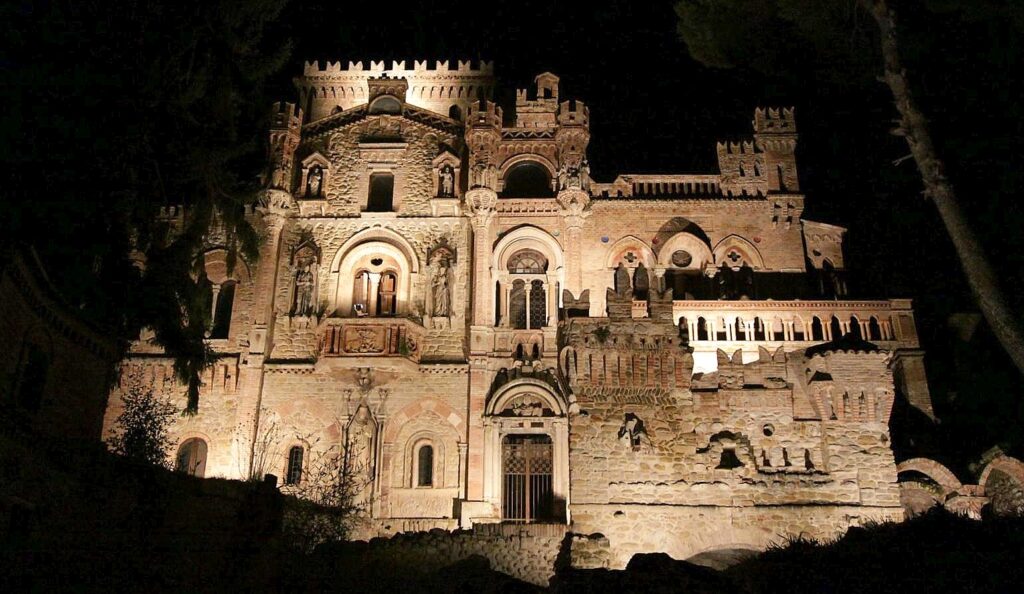
A place of events and culture waiting to be rediscovered, a true gem of Teramo! This is how the Castello Della Monica, the main building of Teramo's medieval quarter, is described.
A fascinating complex of nineteenth-century buildings built on the hill of San Venanzio, blending different architectural and artistic styles into a single structure.
A medieval-style construction commissioned by the Teramo-born artist Gennaro Della Monica, who, at the end of the 1800s, decided to treat himself to a castle complete with battlements and windows, where he could go on to live with his family.
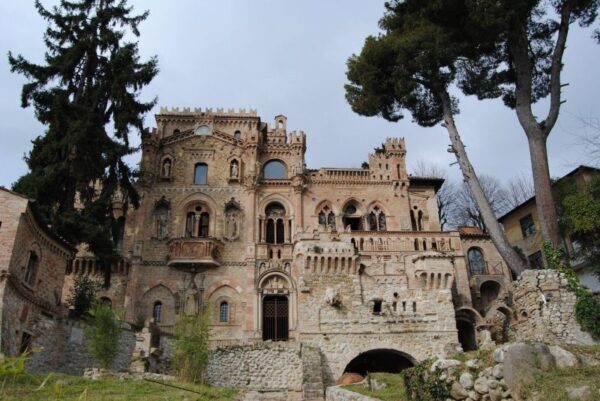
The main building was erected on the site of the ancient church of San Venanzio, destroyed by the French, from which the construction materials and decorative elements were reused. Gennaro Della Monica lived in the castle, carrying out within its walls a vast body of studies, notes and drawings produced during the works to complete the entire complex. In the following years, two further secondary buildings were also finished, which, together with the main structure, form a genuine medieval-style hamlet comprising, besides the main building and two adjoining structures, a service annexe and some charming terraced gardens.
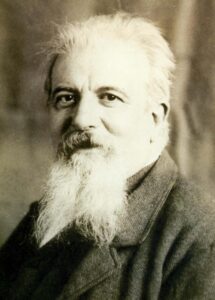
The inauguration of Teramo's new Teatro Comunale (Municipal Theatre) in 1868 gave the young painter Della Monica the chance to try his hand at caricature, a field in which he revealed exceptional talent, poking fun at the protagonists and onlookers of both the theatrical stage and the city's social stage. In the following years he produced numerous paintings: in Teramo for the churches of Madonna della Cona, Sant'Agostino and San Matteo, for the Sanctuary of Madonna delle Grazie, and for the Cappella del Riparo near Porta Romana. However, his best-known painting is Bruto che condanna i figli (Brutus Condemning His Sons), completed in 1886 for the new Assize Court hall of Teramo's law courts, today the conference hall of the civic art gallery. He devoted himself in particular to historical painting, but is also remembered for his intense work as a portraitist and, above all, as a landscape artist. Numerous works of his depict corners and views of the Gran Sasso and Monti della Laga area.