
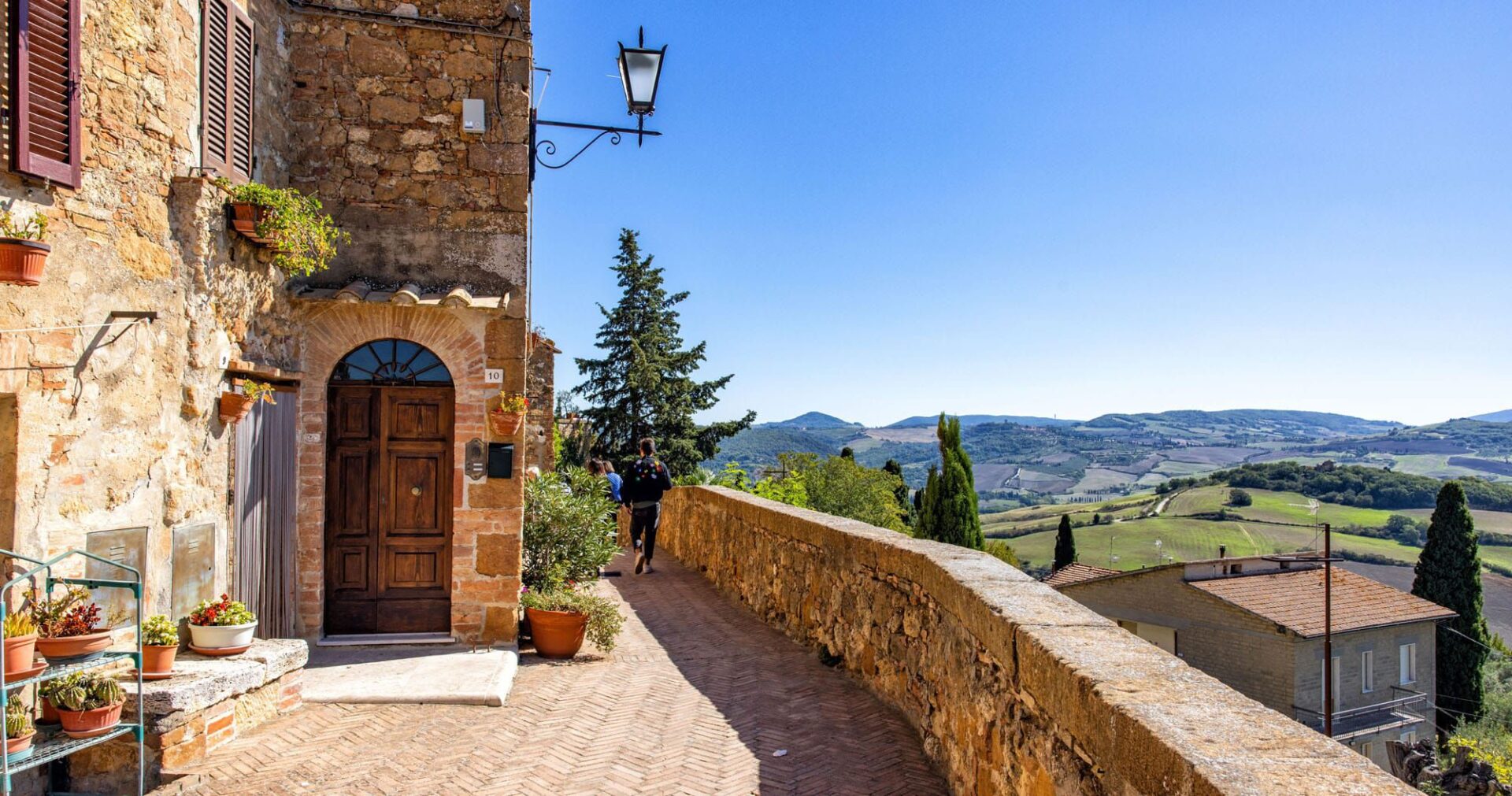
We're in Val d'Orcia, in southern Tuscany, just a few kilometres from both Montalcino and Montepulciano. Here lies the village of Pienza… a postcard-perfect wonder unfolding amid breathtaking views and gentle hills! The result of a dream of pure beauty, Pienza remains a little gem you'll fall in love with at first sight.
Recognised as a UNESCO World Heritage Site in 1996, it is a wonderful testament to Renaissance town-planning principles: the rational organisation of its spaces and the incomparable perspectives of its sixteenth-century squares and palaces captivate every visitor's gaze.
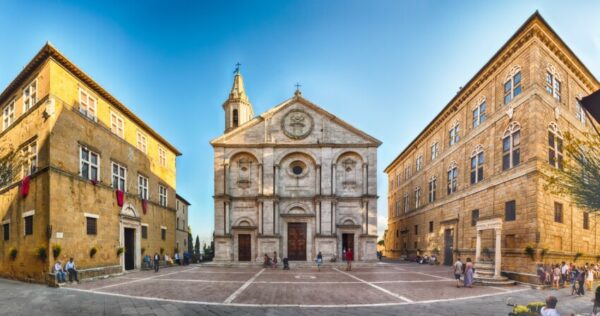
As mentioned, the history of the ideal city is closely tied to Pope Pius II, who fulfilled his dream of reimagining his home village, transforming it into an urban centre inspired by the architectural and town-planning principles of the Renaissance. Giovanni Pascoli described it as "born of a thought of love and a dream of beauty".
Pienza is regarded as a UNESCO World Heritage Site of great universal value, not only because it represents the earliest example of humanist-inspired town planning of its time, but also because its status as an "ideal Renaissance city" has served as a model for other cities in Italy and abroad.
Pienza's historic centre is a place of enchantment, carefully tended in every detail and steeped in history. Making it even more magical is the scenic beauty of the surrounding Val d'Orcia, which you simply cannot help but fall in love with. The beauty of its buildings, the magical atmosphere and the incredible panoramic views have made this village a much-loved backdrop for painters, artists, photographers and film directors.
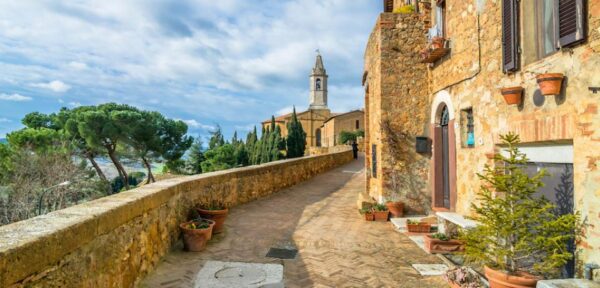
The first stop on your tour of Pienza is Palazzo Piccolomini, a masterpiece by Rossellino, which houses important antique furniture, works of art, a fine library and numerous treasured relics. The real gem is the hanging garden that encircles the palace: from the loggia you can admire the panorama of Val d'Orcia.
Another unmissable stop is the Pieve di Corsignano. This place of worship, which has undergone many alterations over the centuries, is considered a fascinating esoteric monument.
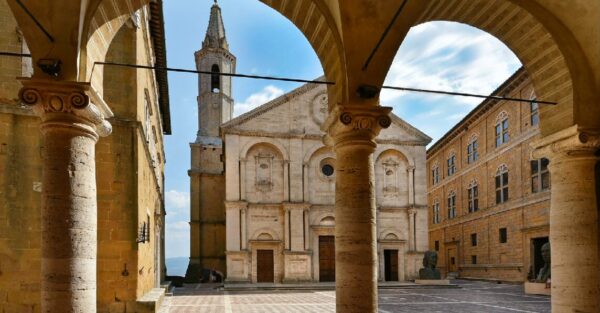
The third stop, in the heart of Pienza, is the Palazzo Comunale, facing the Duomo (cathedral). Also designed by Rossellino, it dates back to the mid-1400s and features a wide loggia across its façade.
The last stop is Palazzo Massaini, a marvellous architectural complex set on the hillside. It was built in the 1500s by the Massaini family on top of a previous castle of medieval origin.
Beyond the classic routes for admiring the beauty of the village and its surroundings, if you're keen walkers, consider organising one of the many treks the area has to offer: there are plenty of ways to make the most of a holiday in Pienza.
If you're looking for an excuse to visit Pienza, mark your calendar for the first Sunday of September, when the "Fiera del Cacio" (Cheese Fair) takes place, complete with the traditional cheese-wheel-rolling game: besides celebrating the cheese that is the city's gastronomic pride, the village's six contrade (districts) compete in a quirky contest, amid tastings and entertainment.