
It's normal to talk about what a city has when you mention it. But there are rare cases where the exception proves the rule.
The most famous of these? Padua, the city commonly known as "the city of three withouts", for reasons each more curious than the last.
In the plains of Veneto – about 45 minutes by car from Venice and an hour from Verona – Padua is a vibrant city, rich in cultural and artistic attractions, with many places to see and plenty of curiosities to discover. In just a weekend, you'll uncover a place that will leave you longing to return.
Different historical eras and celebrated artists have gifted it a Beauty that reveals itself as you stroll, all condensed into a historic centre large enough to offer something even to the most discerning visitors, yet small enough to explore entirely on foot.
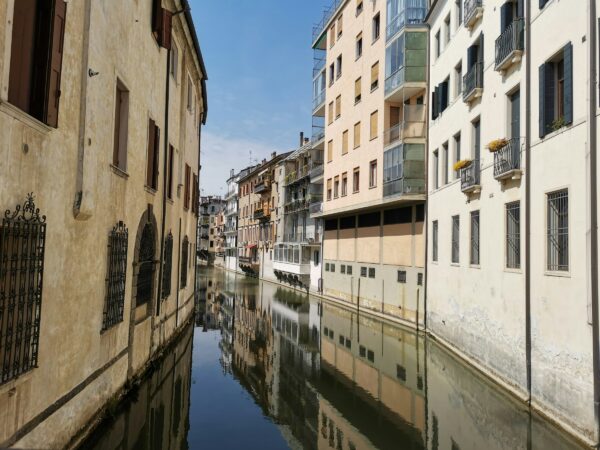
Padua is a small gem that reveals itself step by step, as you walk sheltered beneath its porticoes, amid the romantic atmosphere of historic palazzos and the lively bustle of its squares. It's also a place that offers endless magical glimpses, capable of captivating anyone curious enough not to simply follow an itinerary, but to discover the Beauty of the details by strolling along with their eyes turned upwards.
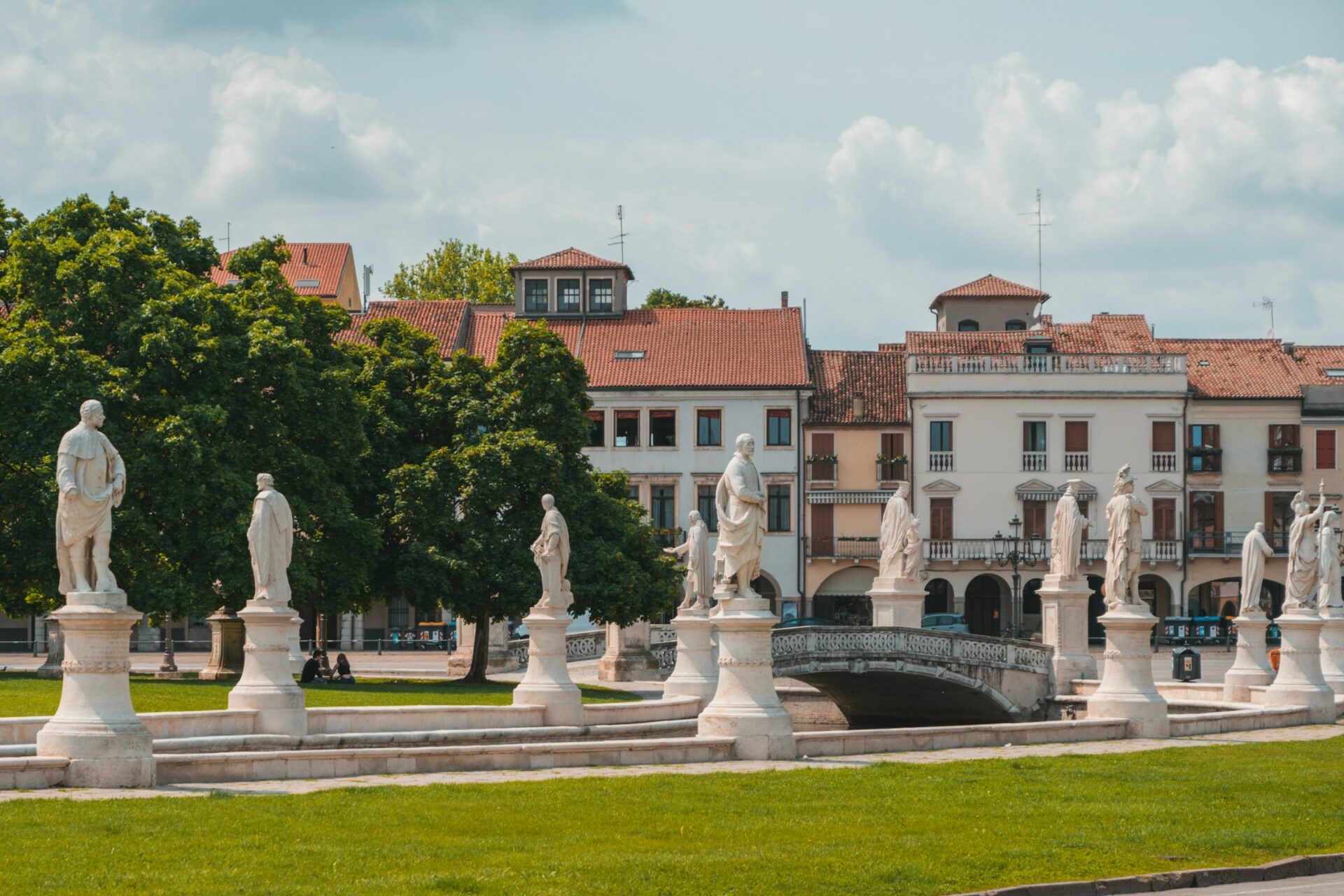
Padua is named this way because of its "nameless Saint", its "grassless Meadow" and its "doorless Café": these are, respectively, Saint Anthony, Prato della Valle and Caffè Pedrocchi — three places you absolutely must see on a visit to the city.
The domes of the Santo – Saint Anthony is, in fact, simply known as "Il Santo" ("The Saint") – rise above the surrounding buildings, and if you ever get the chance to admire Padua from above, they're easy to spot. The basilica was built between 1232 and the mid-1300s, and remains a place of pilgrimage for the faithful from all over the world.
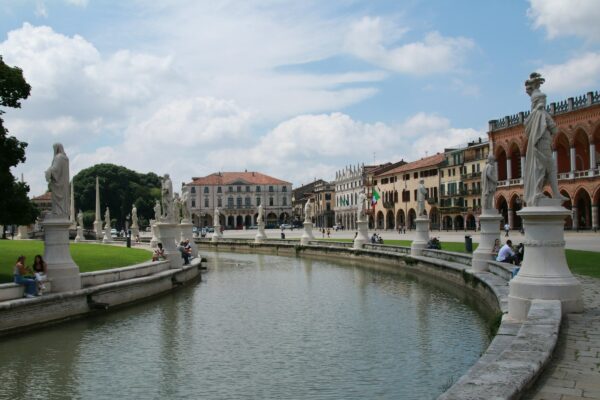
Not far away, Prato della Valle is the second-largest square in Europe. It's undoubtedly one of the city's most captivating spots, beautiful at any hour — from when the morning mist creeps among the monuments to when night falls and artificial lights take over.
Another symbol of Padua is undoubtedly the Caffè Pedrocchi, an imposing neoclassical building, known as "doorless" because from its opening in 1831 until 1916 it remained open day and night as a "place where ideas were born", a meeting point for intellectuals, academics and political figures.
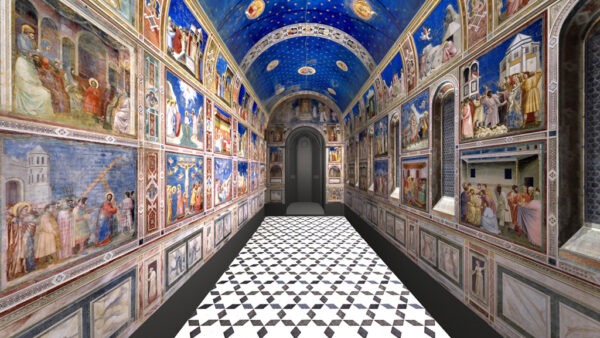
The renowned Scrovegni Chapel is a masterpiece by Giotto, who frescoed it between 1303 and 1305 on commission from Enrico degli Scrovegni, a member of one of the city's most powerful families. The frescoes entirely cover the walls, depicting the stories of the Virgin and Christ, culminating in the grand Last Judgement, which brings the story of humanity's salvation to a close.
In 2021, UNESCO added the Chapel to its list of World Heritage Sites, along with other sites within Padua's city walls that house a selection of fourteenth-century fresco cycles painted by various artists.
You can discover the atmosphere of Padua through guided tours and by savouring traditional dishes in its restaurants, an experience that embraces the city's millennia-old history and the traditions of this fascinating place.