
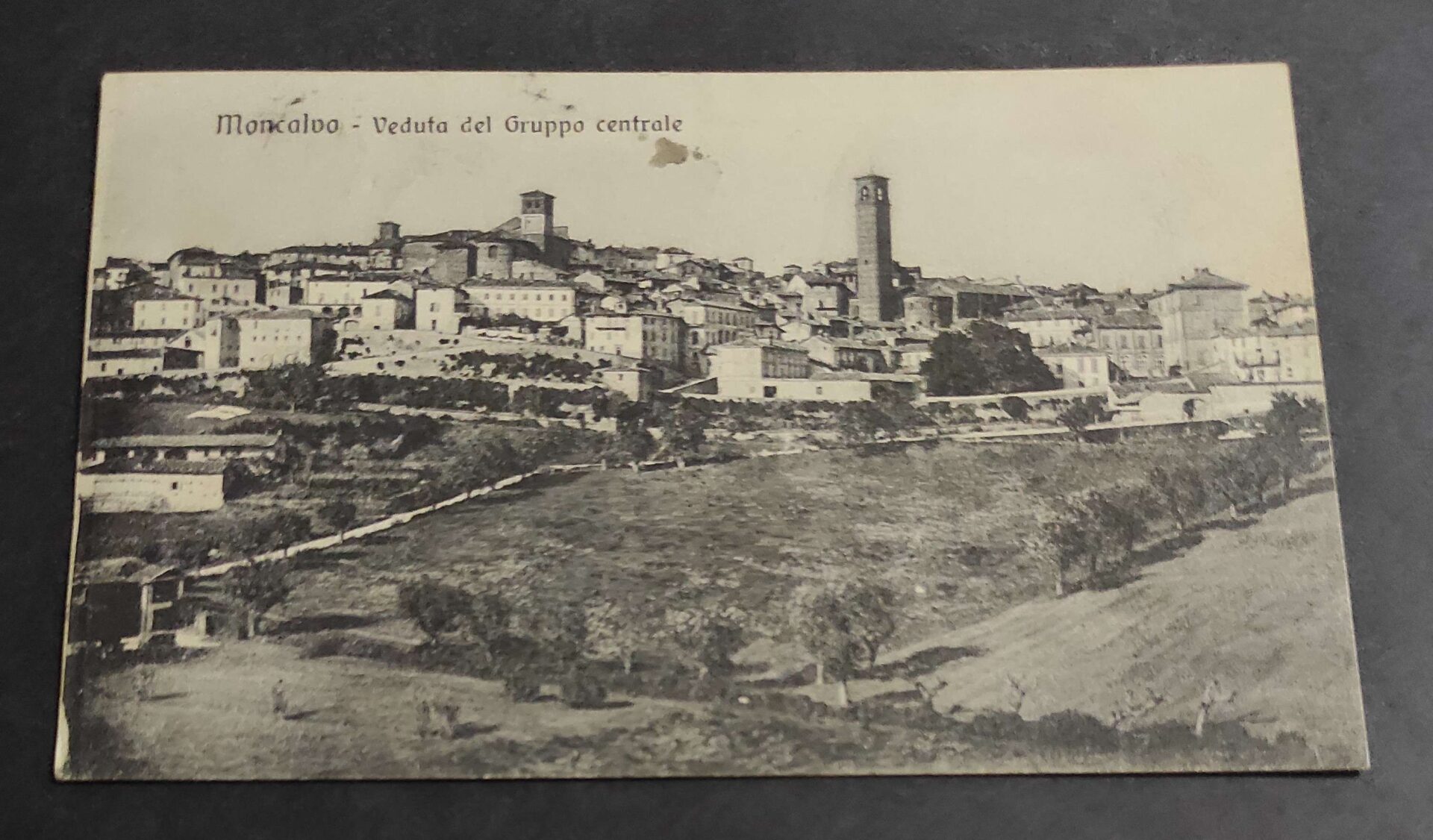
Spread across a hill like an impenetrable bastion barring the way to Casale and the plain, Moncalvo was, over the centuries, the property of the Marquesses of Monferrato, the Gonzagas and the Savoys. In 1705 Duke Ferdinando Carlo Gonzaga of Mantua granted it the title of City, a title later confirmed by the Savoys, precisely by Vittorio Amedeo III in 1775.
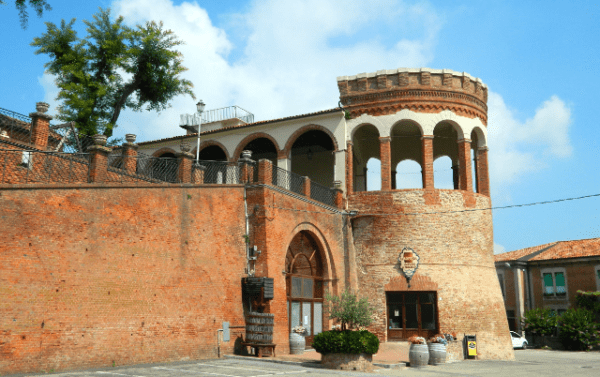
Thanks to its natural position and its fortifications, it was from its very origins one of the main strongholds of Monferrato, remaining so until 1690. In the castle, of which part of the imposing walls and towers still remain, lived the Governor or the Marquess of Monferrato during his stays in Moncalvo.
The centuries-old prestige of the town led Guglielmo Caccia to choose Moncalvo as his artistic name, and it is under this nickname that he has gone down in history as the greatest painter of the Piedmontese Counter-Reformation.
The route can only begin from the great Castle square (Piazza Carlo Alberto), for centuries a wide esplanade used for the cattle market. Leaving the castle behind, we soon find traces of the old Jewish ghetto in the Synagogue, which still speaks to us through the Hebrew inscription on its façade, while its furnishings were long ago moved to Israel.
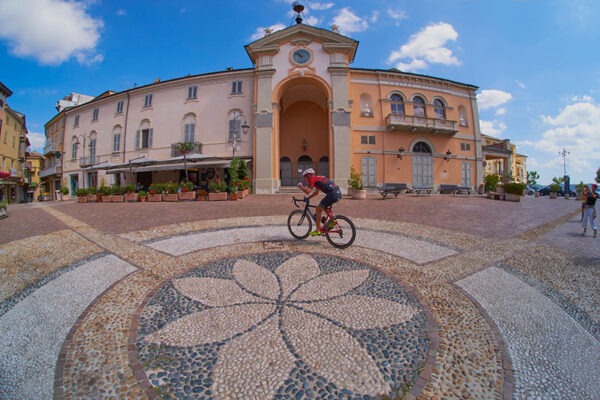
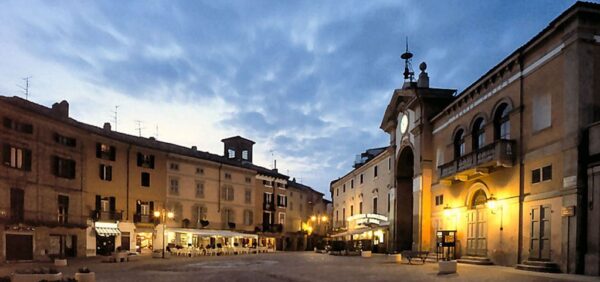
The large square then narrows, gathering in front of the curious nineteenth-century Theatre, which, if any further proof were needed, reaffirms the ambition and prestige of Moncalvo.
But the most welcome and unexpected surprise is the other wing of the convent, which houses, within the Museo Civico, the Montanari Collection, donated to the town by this famous ambassador and which leaves visitors astonished by its richness and the man's refined taste.
The street opens out again onto the theatre square, at the corner of what remains of the Palazzo dei Marchesi del Monferrato, a rich fifteenth-century building of which the two rows of round-arched terracotta-framed windows and the elaborate string courses are still worth noting.
On the ancient hill of Monteguardo stands the town's other jewel: the Romanesque Church of San Francesco, with the tombs of the Caccia family and some members of the House of Monferrato, and, as in Sant'Antonio, numerous important canvases by Moncalvo and his daughter.
Finally, in the Torrione Bonaventura, the Bottega del Vino (wine shop): not to be missed are the rediscovered secret passageways running along the entire walls as far as the last tower, connecting with the Tourist Office.
Alongside its noble historical heritage and artistic treasures, Moncalvo also preserves a solid culinary tradition, as confirmed by the colourful Festival delle Cucine Monferrine, the historic Fiera del Bue Grasso (Fat Ox Fair) and the Fiera del Tartufo (Truffle Fair), which, after Alba's, is the most important in all of Piedmont!