
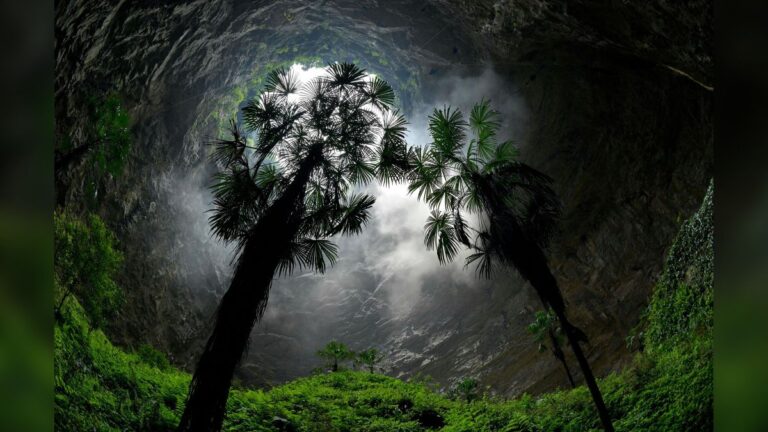
A team of scientists has discovered a karst sinkhole in southern China: it appears to be a gigantic chasm containing a lush forest reminiscent of the landscapes in “Avatar”. “I wouldn't be surprised to find species here that are still unknown to science” – said Chen Lixin, head of the Chinese expedition.
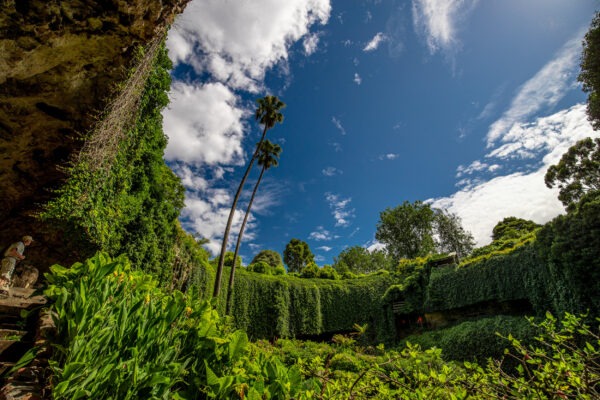
The site of the discovery, Leye County (in the Guangxi region), is a karst landscape where 29 other sinkholes have already been found. This one is of impressive size: almost 200 metres deep, over 300 metres long and 150 metres wide. Inside, trees up to 40 metres tall stretch their branches upwards in search of light.
The Chinese call these gigantic sinkholes tiankeng, literally "heavenly pits". These karst caverns truly resemble an earthly depiction of the Garden of Eden, and serve as an oasis for life. As well as being hospitable habitats for many forms of life, tiankeng lead down to aquifers or deep water deposits. Karst aquifers supply water to as many as 700 million people worldwide, and unfortunately they can easily be drained or polluted.
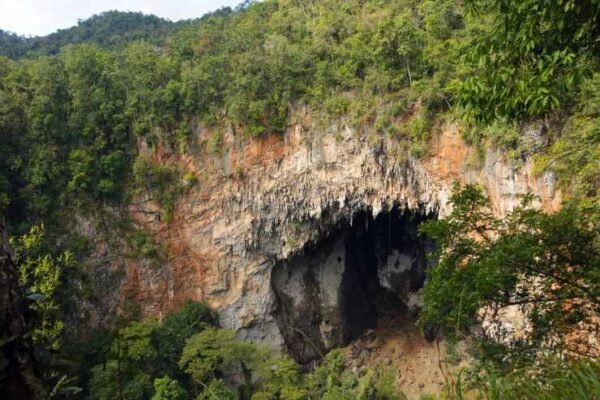
Karst landscapes form as a result of the dissolution of the bedrock: slightly acidic rainwater absorbs CO2 as it seeps into the ground, becoming even more acidic. As it flows through cracks, it widens them, forming tunnels and cavities.
Over time, if the cave grows large enough, the ceiling gradually collapses, opening up huge chasms. Local geology, climate and other factors mean that karst landscapes vary greatly from one area to another: in some cases, as here, we find ourselves faced with immense sinkholes that almost transport us into a parallel universe!