It shouldn't surprise us that an Italian monument ranks among the most visited in Europe, given how rich our country is in beauty, admired and visited every year by thousands of tourists from all over the world! The online platform “Musement” – widely used by travellers as an excellent aggregator of tickets, packages and information on monuments, museums, exhibitions and various events – has recently drawn up a ranking of Europe's most visited attractions, based on reviews gathered from Google.
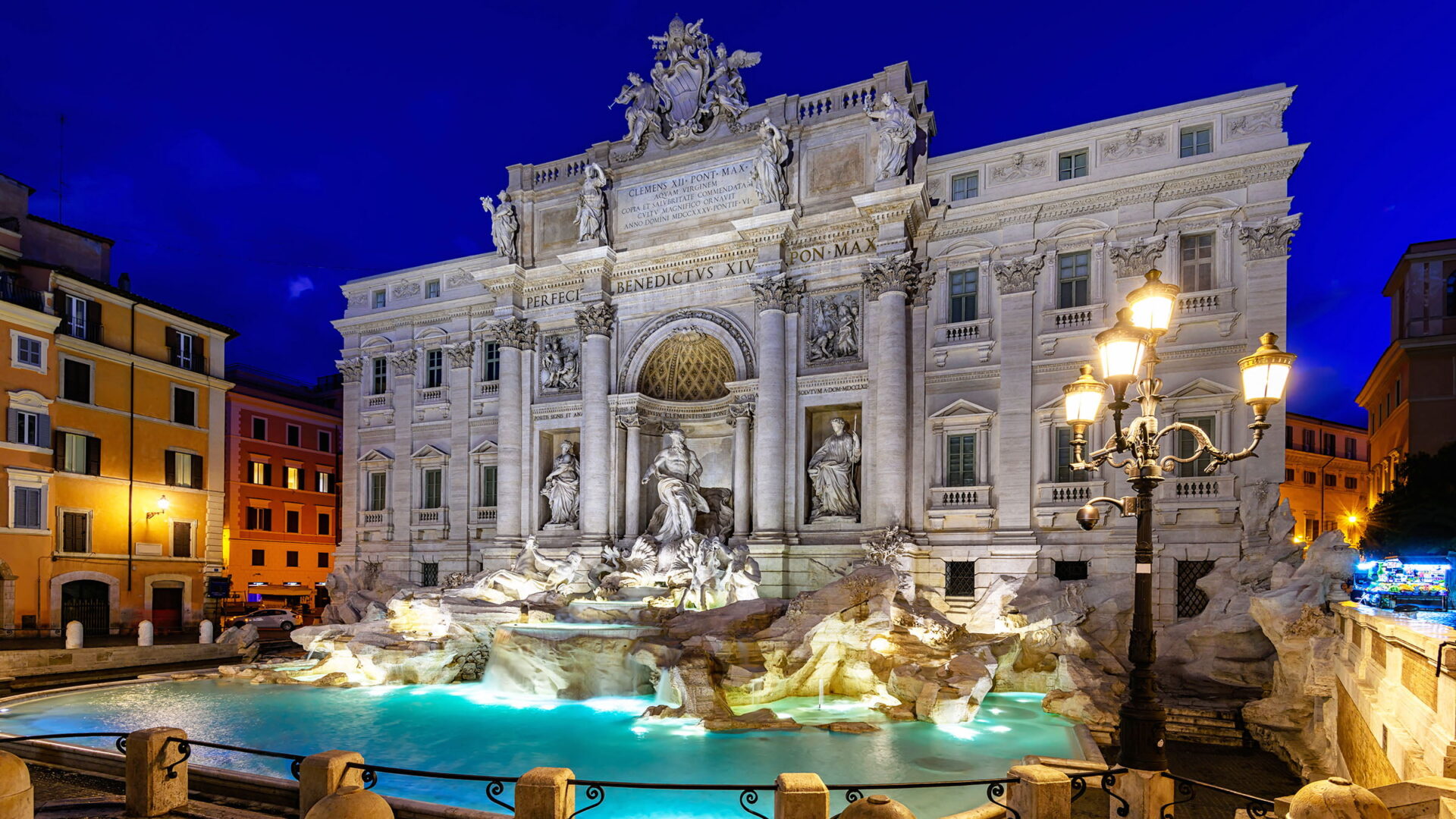
Top of the ranking is an Italian monument that's an essential stop whenever you visit the Eternal City! We're talking, of course, about our beautiful capital and one of its most celebrated water features: the Trevi Fountain. With 345,000 reviews, it's the most popular attraction. Open to visit every day with no time restrictions or entrance tickets, it's an utterly magical place.
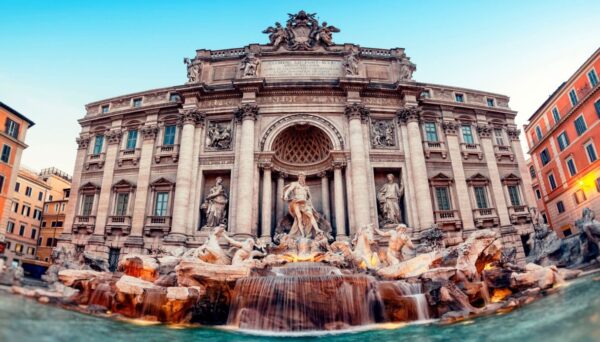
In the heart of Rome, the Trevi Fountain is a few minutes' walk from Piazza Barberini. Its name probably derives from the word “trivio”, referring to the crossroads of three areas: Tiburtina, Prenestina and Collatina. It has existed since 19 BC, built on the orders of M. V. Agrippa, and was initially a link to the Acqua Vergine aqueduct, one of the eleven aqueducts of Ancient Rome. It was later restored and completed, first by Bernini in the 1600s and then definitively commissioned by Pope Clement XIII, thanks to the work of architects Nicola Salvi and Pietro Bracci. In recent times it has undergone restoration of its hydraulic system and cleaning, and in 2019 the lighting system was also modernised.
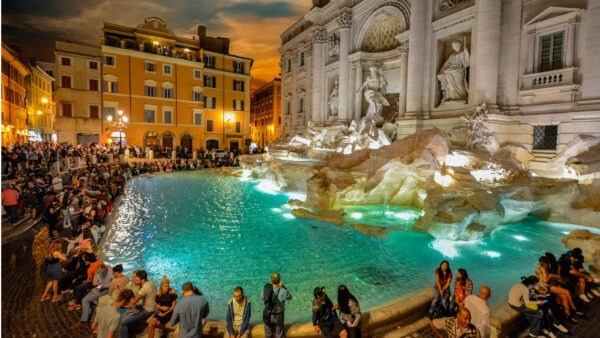
A truly magical spectacle to behold, even at night, announcing its presence from the surrounding alleyways through the gentle sound of its flowing waters. Its beauty is overwhelming thanks to an incredible wealth of sculpture dedicated to various themes, starting with the sea. Set against the backdrop of Palazzo Poli, at its centre stands the statue of Oceanus, flanked by allegorical figures celebrating the fertility of the harvest. There are also two bas-reliefs, one depicting a virgin showing soldiers the water, the other depicting Agrippa. Today it measures 20 metres wide by 26 metres high.
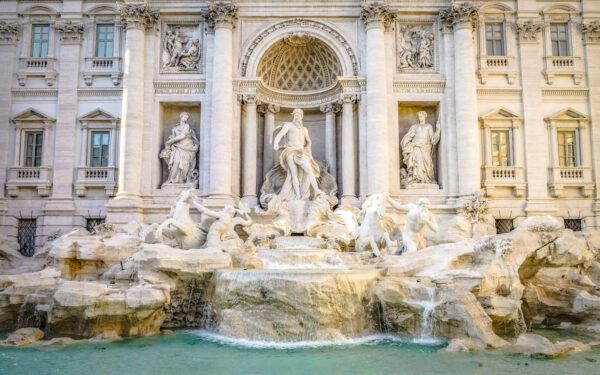
Several legends have been passed down about Europe's most popular attraction. The most famous is that of the coin toss. Turning your back to the Fountain, closing your eyes and throwing a coin into it, you're said to be guaranteeing a return visit to Rome in the near future. Over time, the ritual has also come to be seen as a way of making a wish come true. It seems this legend was born thanks to the German archaeologist Wolfgang Helbig, who, visiting Rome in the 1800s, invented the ritual to lift the spirits of friends saddened at the thought of leaving the city. The earnestness with which visitors almost automatically toss a coin each day means a small fortune accumulates in the Fountain's waters, which is collected and donated to the diocesan Caritas for charitable works.
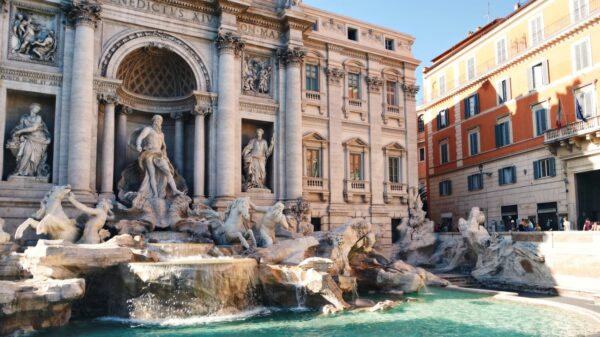
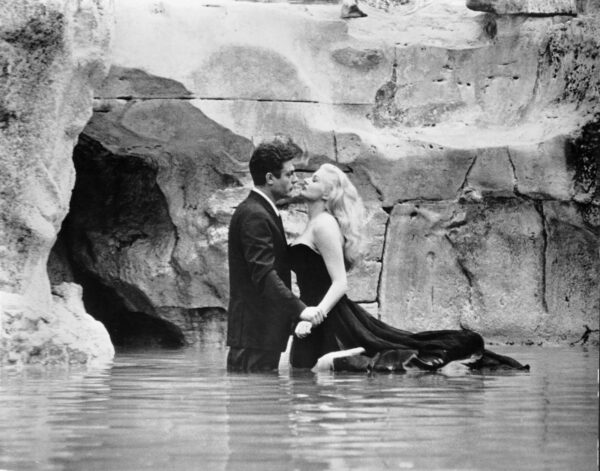
A monument so ancient that it has become deeply embedded in culture the world over. Famous, for instance, is the scene from the film “La Dolce Vita“, Federico Fellini's much-loved classic, in which Anita Ekberg bathes in the Fountain, inviting Marcello Mastroianni to join her with the cry “Marcello, come here”. A symbolic piece of fiction that cannot be repeated, since in real life bathing in its waters is strictly forbidden!