
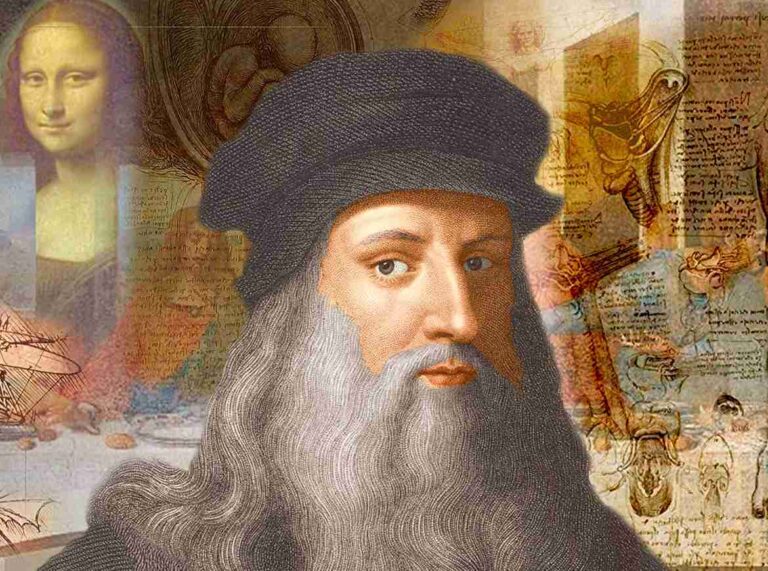
Milan has always been a cultural hub, home to countless intellectuals, artists and great names who have shaped history. One of these was Leonardo da Vinci, who lived here for several years. An absolute genius and multi-talented artist – painter, sculptor, engineer, inventor, scientist, visionary – he was one of the few to truly leave his mark. Still today, his works are numerous and continue to be studied and admired the world over.
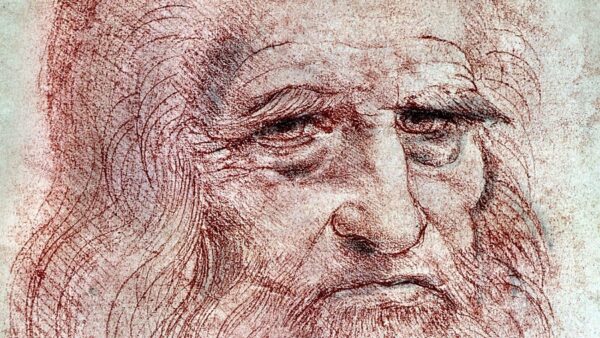
In Milan there are several places where you can get closer to Leonardo's legacy. Let us introduce you to a few spots where you can admire his greatness!
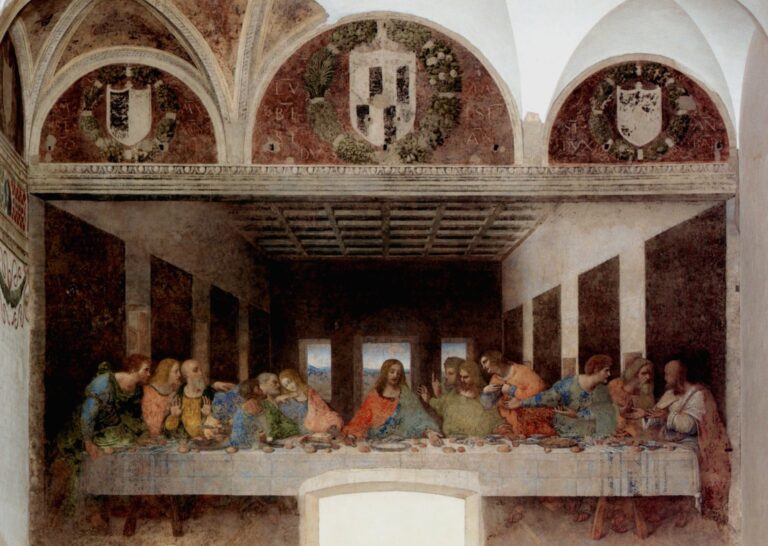
You simply can't miss seeing Leonardo's famous painting, The Last Supper, in person. Commissioned by Ludovico Sforza, it decorates the refectory of the Dominican Convent of Santa Maria delle Grazie. A spectacular place, not only for the painting but for the beauty of the religious complex itself. The fresco is enormous and will tower over you as you step inside!
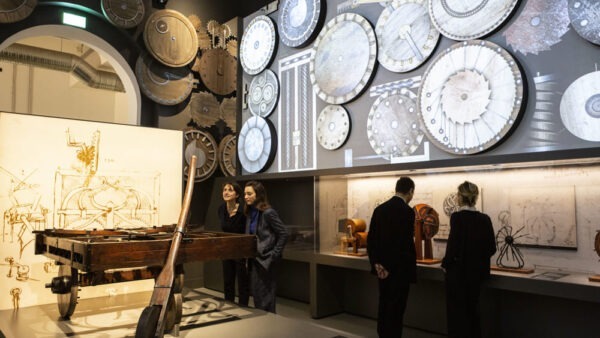
Another essential stop for discovering da Vinci's story is the Museum of Science and Technology. The venue features a section entirely dedicated to the artist: over 1,300 sqm and 170 items including historical models, works of art, antique volumes and installations. A journey that traces the history and training of the Tuscan genius.
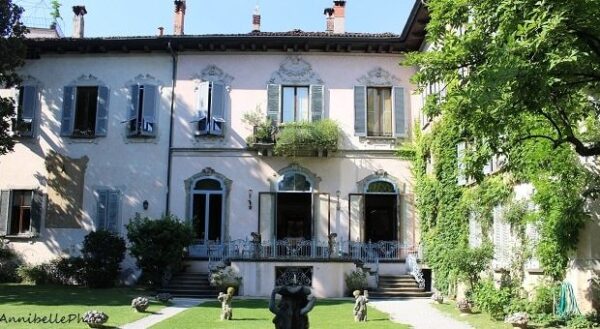
Inside Casa Atellani – the residence of Ludovico Sforza – there is a vineyard that the Duke gave to Leonardo while he was busy painting The Last Supper. A bucolic corner where time seems to stand still, were it not for the lush vegetation that changes colour with the seasons!
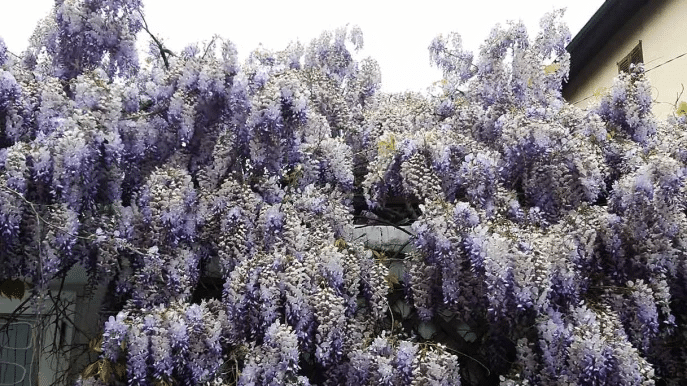
We're now in the Ripamonti area. Leonardo's wisteria is one of the oldest in Italy: it's estimated to be more than 715 years old! Leonardo was very fond of this beautiful flowering wisteria, where he loved to spend some of his time meditating and finding inspiration. It's said that back when the wisteria was growing, Leonardo (who worked steadily in Milan) liked to sit in the shade of this great plant to cool off and reflect.
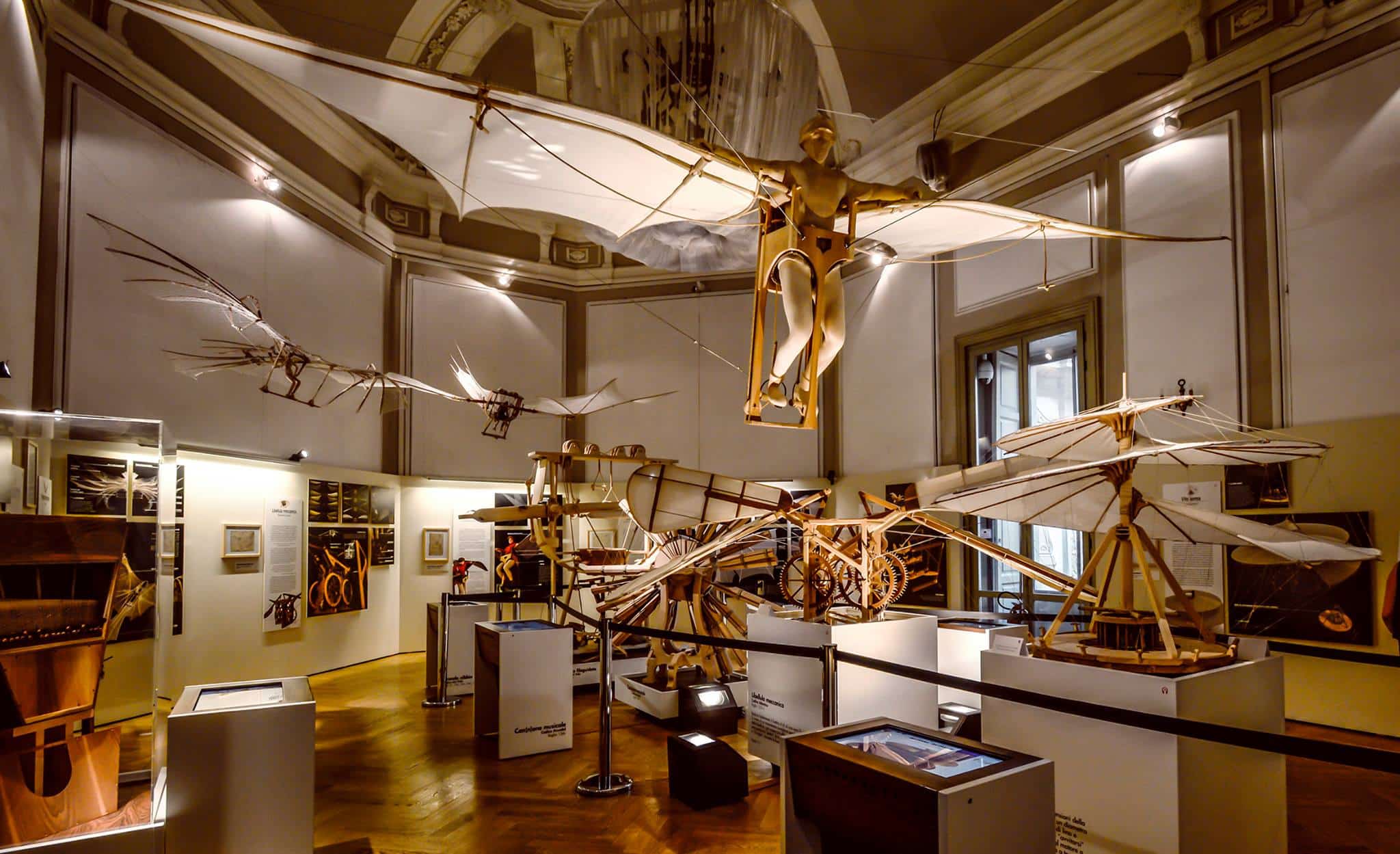
Another unmissable spot is the Museum entirely dedicated to the great inventor. A unique exhibition that lets you discover the real Leonardo da Vinci, artist and scientist, thanks to original reconstructions of his machines and restorations of his most famous paintings. A full 360-degree immersion into Leonardo's world!
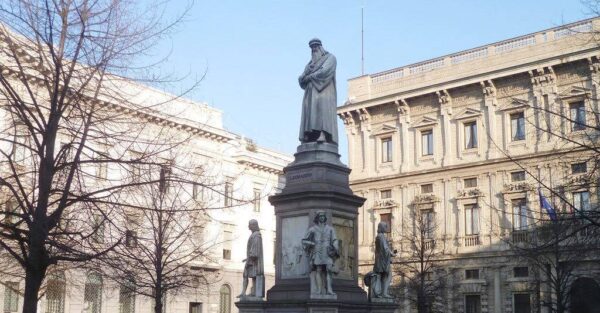
If you'd like to admire a tribute to the great artist, take a stroll to Piazza della Scala. Here you'll find a towering statue of Leonardo himself. The monument was created by sculptor Pietro Magni and unveiled in 1872. Beneath him stand four further marble figures on pedestals, representing four of Leonardo's pupils: Giovanni Antonio Boltraffio, Marco d'Oggiono, Cesare da Sesto and Gian Giacomo Caprotti.
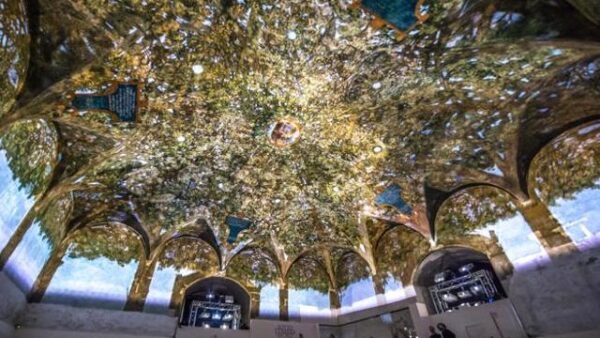
Named after the wooden planks (asse) that once lined its walls, the Sala delle Asse is a room found within the Castello Sforzesco in Milan. Ludovico il Moro commissioned Leonardo to create the famous fresco that covers the ceiling and walls: the room features a decoration of interwoven branches and mulberry trees which, with remarkably lifelike effect, recreate a pergola running the length of the vault and walls, giving the impression of a charming open-air veranda.
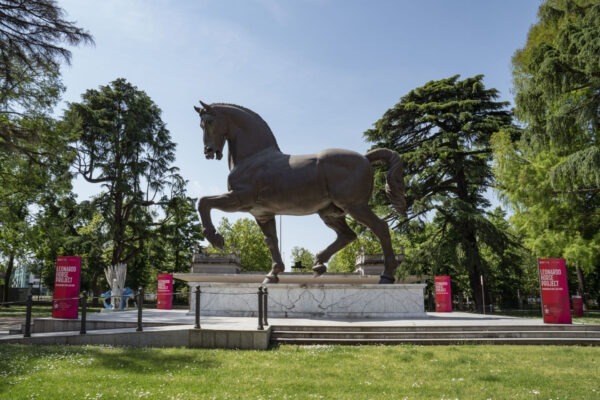
Another stop for tracing Leonardo da Vinci's footsteps is the horse in the San Siro area. The story goes that Ludovico il Moro commissioned the artist to create this huge bronze horse in honour of his father Francesco. The project required 10 tonnes of bronze, but when war broke out between France and the Duchy of Este, the bronze was instead used to make cannons for Milan's defence. Centuries passed, Leonardo never finished the work, and the project was abandoned. But wealthy collector Charles Dent decided to see it through: he set up a foundation in the horse's honour and over 15 years raised 2.5 million euros to bring the sculpture to life. The project was entrusted to sculptor Nina Akamu, who drew inspiration from the Tuscan artist's sketches. Once completed, the horse was donated to Milan in 1999 and now stands near the city's racecourse.
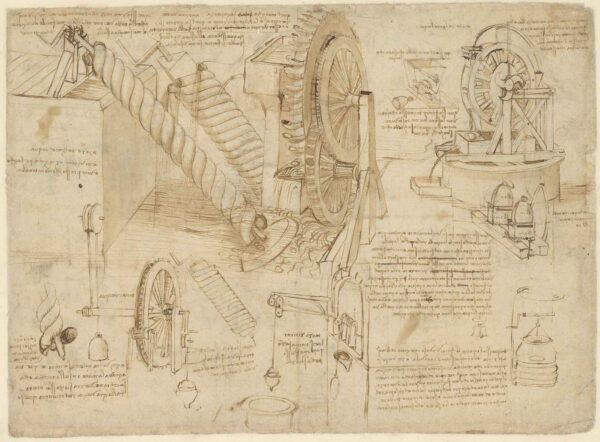
Another extremely important testament is Leonardo's Codex Atlanticus, held at the Pinacoteca Ambrosiana. It is the largest collection of his sketches, drawings and projects: more than 1,700 drafts and studies make up the Codex Atlanticus, with no particular order. A curious fact: it is called "atlanticus" because the size of the sheets used by the scientist was typical of the geographical atlases of the time.
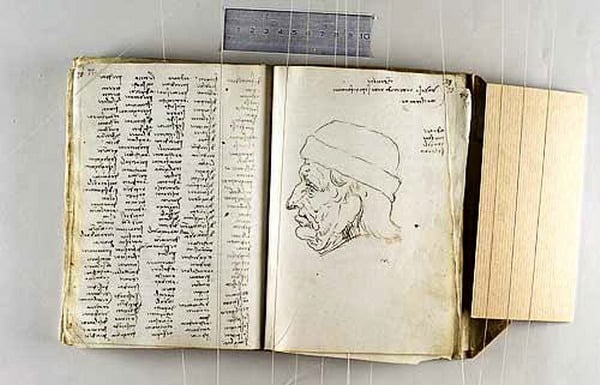
The final stop to rediscover Leonardo da Vinci in Milan is once again at the Castello. Here, in the Biblioteca Trivulziana within the Cortile della Rocchetta, you'll find the famous Codex Trivulzianus 2162, which is none other than his notebook, where towards the end of the 1500s Leonardo made drafts and sketches of projects he was working on, along with physiognomic, architectural, mechanical and military studies.