
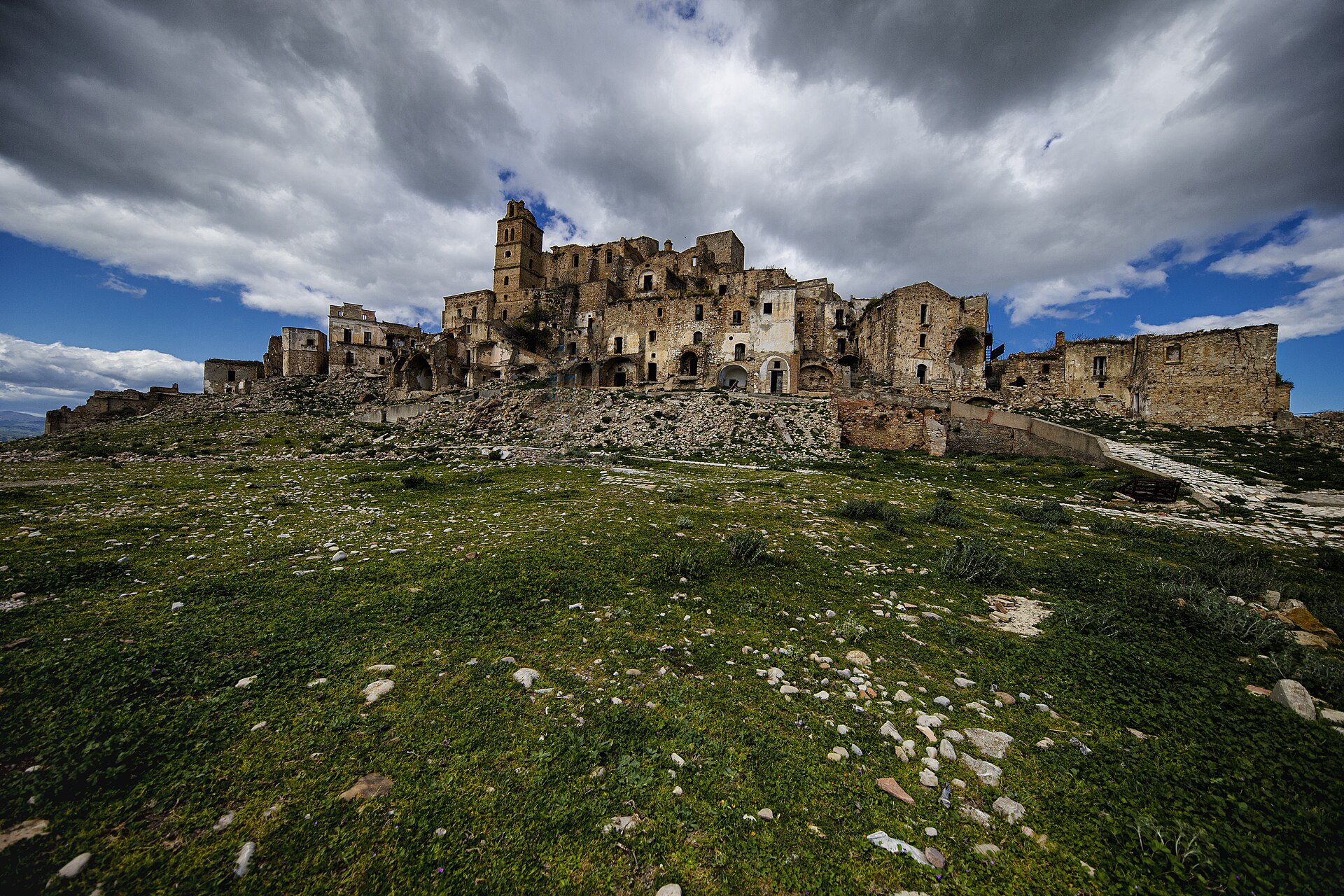
Italy's ghost villages are back in the spotlight: while mountain and inland communities are being repopulated, curiosity is also growing about those left empty, or nearly so. These are places that tell stories of landslides, earthquakes, epidemics and departures, but also of rebirth. From Civita di Bagnoregio, in the Tuscia area, to Craco, in Basilicata, from Bernini's Monterano to Rasiglia, reborn in Umbria, here are four destinations for a trip off the beaten track, perfect even in winter, when the silence makes them all the more evocative.
Civita di Bagnoregio, "the dying town"
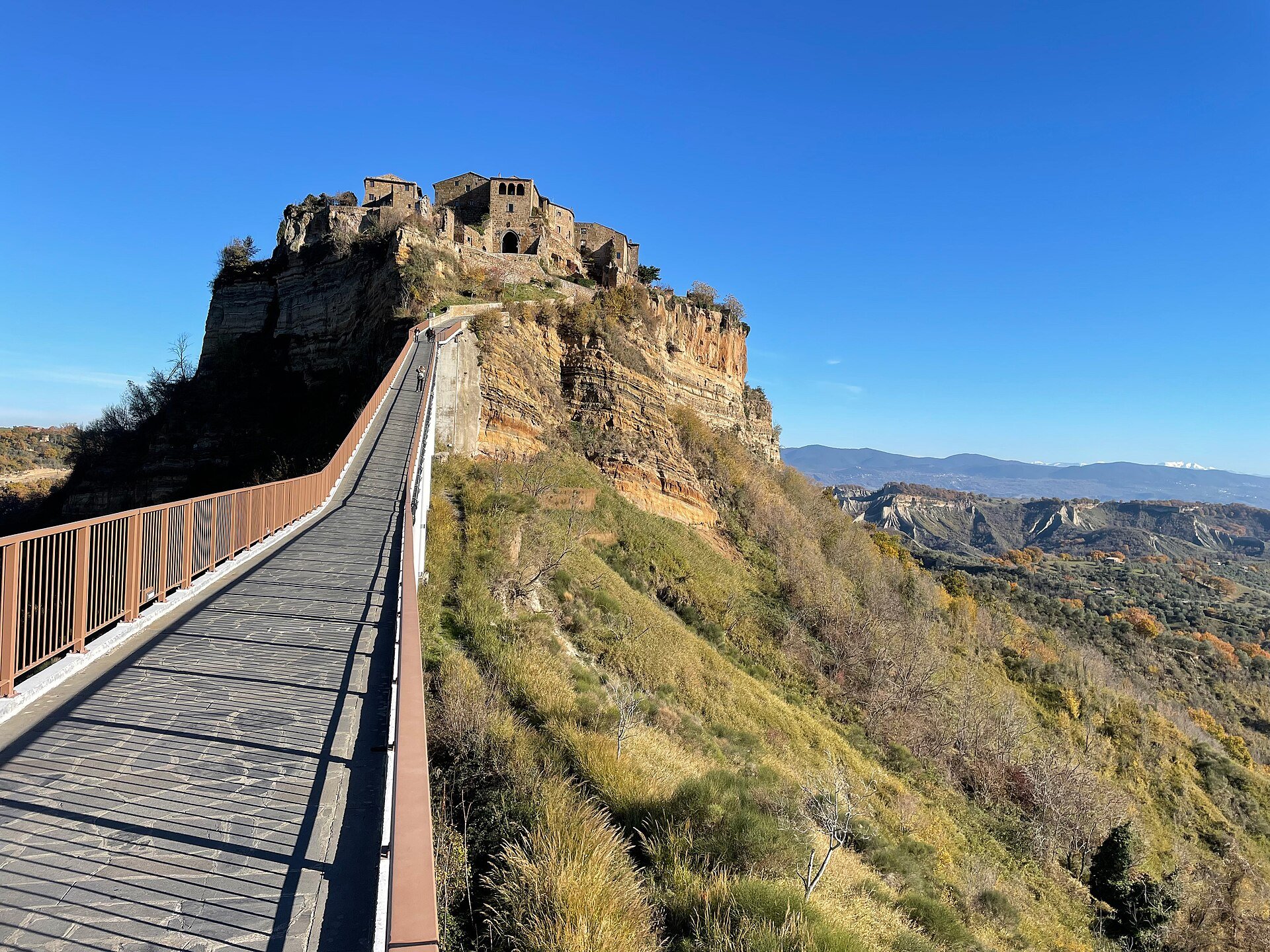
In the Viterbo area, Civita di Bagnoregio is perhaps Italy's most famous fragile village. It's known as "the dying town" because it stands on a hill of tufa rock slowly worn away by erosion. Founded by the Etruscans more than 2,500 years ago, and later passing under the Romans, the Goths, the Lombards and the Papal States, it is reached by crossing Porta Santa Maria, the only one of the original five gates still standing. Inside, a maze of medieval alleys, the square with the Church of San Donato, and the Geological and Landslide Museum in Palazzo Alemanni, which explains the geology of the place. Its suspended profile even inspired Hayao Miyazaki for Laputa: Castle in the Sky. The village's story is told on the italia.it page dedicated to Civita.
Craco, the village emptied by a landslide
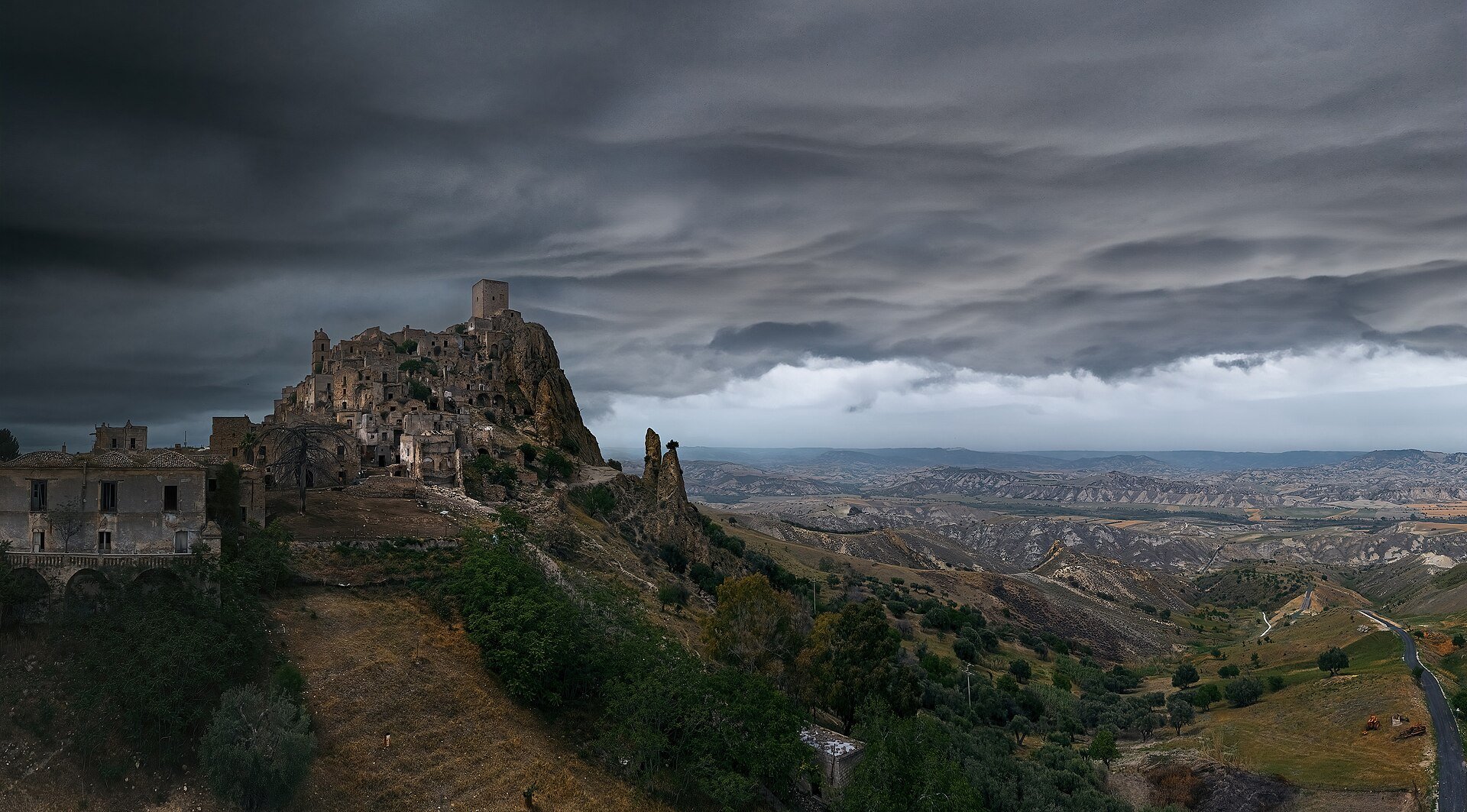
In Basilicata, amid the badlands of the Matera province, Craco has become one of the region's symbols around the world. In 1963, a landslide forced its inhabitants to abandon the medieval centre, once a stopping point along the crusaders' route to the Holy Land. Families moved to a new district nearby, and Craco Vecchia has remained up there ever since: the remains of churches, abandoned buildings and a spectacular view over the Lucanian landscape. More information on the italia.it page on Craco.
Monterano, Bernini's ghost town
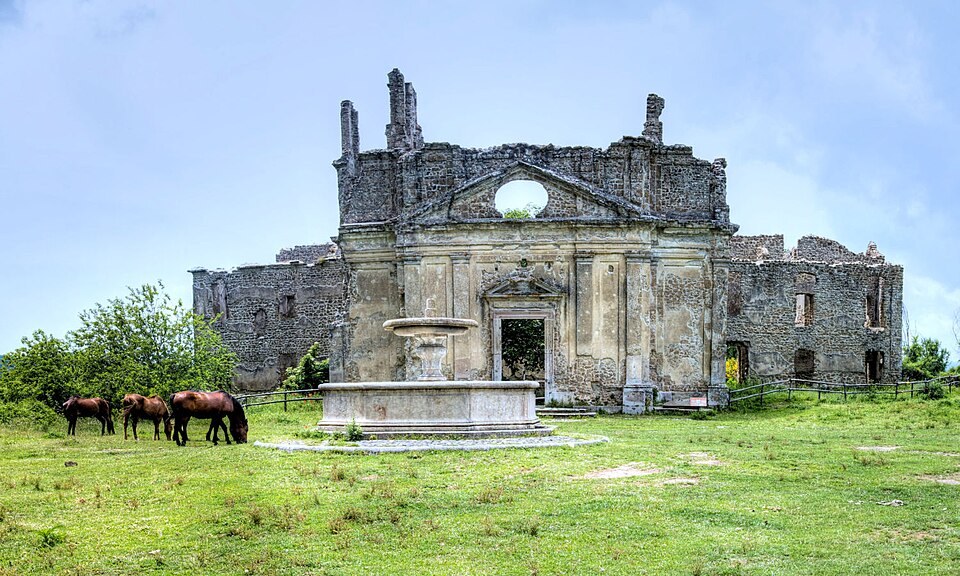
West of Lake Bracciano, between the Tolfa Mountains and the Sabatini Mountains, lies Monterano, a ghost town set within a nature reserve. Its origins are Etruscan; in the Middle Ages it was one of the area's most important centres, passing to the Anguillara family, then the Orsini and finally the Altieri. Under Pope Clement X, a member of the Altieri family, works by the young Bernini arrived. Then came decline, malaria, and plundering by Napoleonic troops.
What to see in Monterano
You enter by passing beneath the ancient aqueduct and arrive at the Altieri baronial palace with the Fontana Capricciosa, topped by a lion. A little further on stands the Convent of San Bonaventura, its church now wrapped in vegetation. The Monterano Regional Nature Reserve, established in 1988, protects woodland, volcanic gorges and pastures: here there are no lights, bars or restaurants, only silence. All the details are on the italia.it page on Monterano.
Rasiglia, the village that came back to life
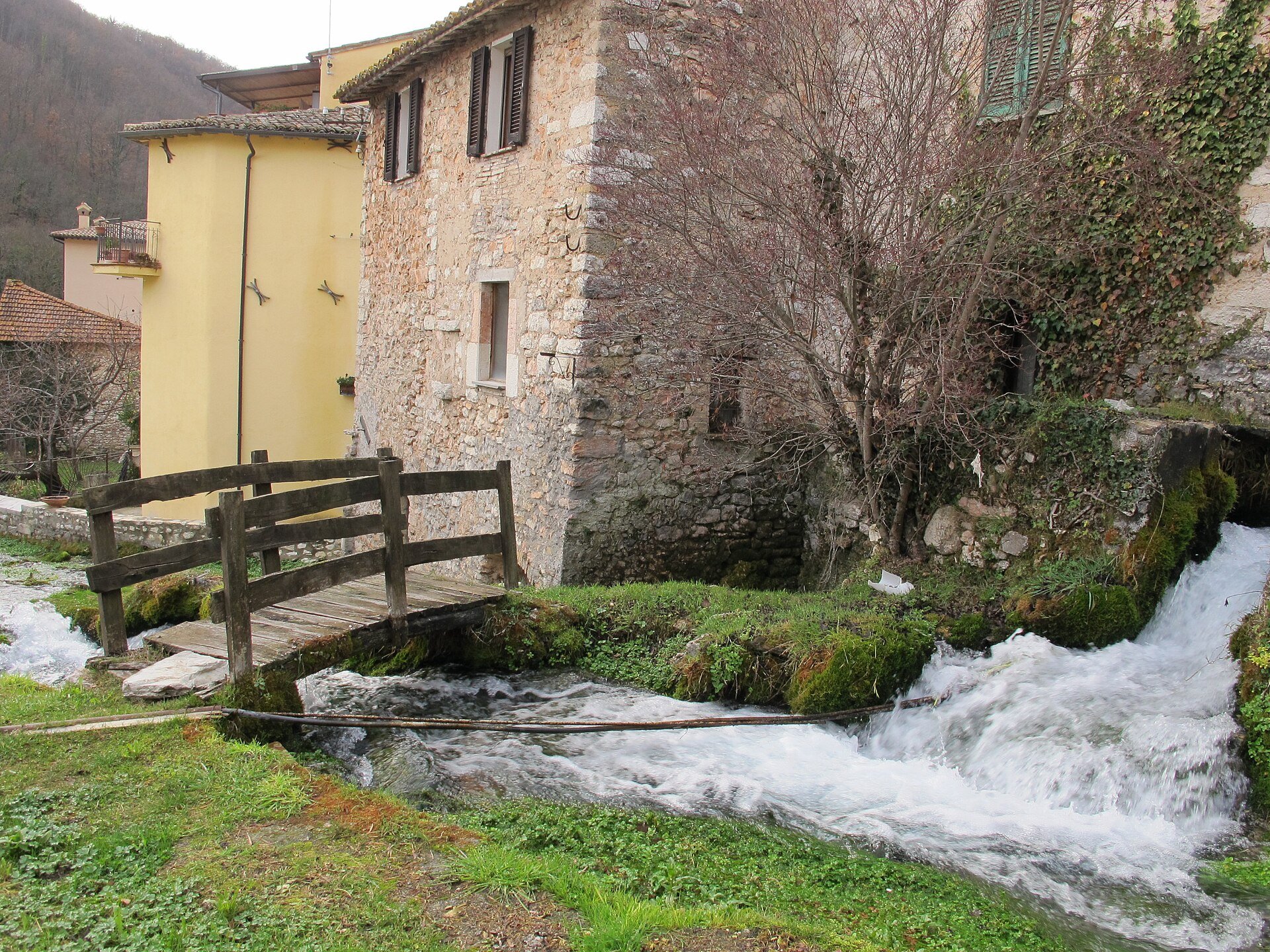
Not all ghost villages have stayed that way. Rasiglia, a hamlet of Foligno in the Menotre valley, had nearly emptied out after the post-war years and the 1997 earthquake. Thanks to its residents and the Rasiglia e le sue sorgenti association, it has been reborn, and today the village of streams, with its mills and restored wool mill, welcomes thousands of visitors. It's proof that an abandoned village can have a future.
Ghost villages on Una gita fuoriporta
With Una gita fuoriporta, we've already visited Rasiglia in the first season, in the episode Foligno & Rasiglia, which you can watch on demand. To explore it, there's our guide on what to see in Rasiglia. For those setting off from Tuscia, the gateway to Civita di Bagnoregio, there's our guide on what to see in Viterbo. And for those seeking silence, our site also has the story of the most isolated city in the world. More ideas for the region can be found on our Lazio page.
Practical tips for visiting ghost villages
- Check ahead: some areas may be closed or accessible only with a guide, for safety reasons.
- Stick to marked paths: ruins and landslide-prone ground are not places to explore alone.
- Wear hiking boots: between tufa rock, trails and stones, sturdy soles are a must.
- Bring water and something to eat: there are no bars or restaurants in Monterano.
- Go in daylight: in winter the sun sets early and the paths aren't lit.
- Respect the place: these are traces of real communities, not film sets to be photographed at all costs.
And to choose your next destination, on our site you'll find all the episodes of Una gita fuoriporta to watch on demand.
Frequently asked questions about Italy's ghost villages
Which is Italy's most famous ghost village?
Civita di Bagnoregio, in the Viterbo area, known as "the dying town" because of the erosion of the tufa hill it stands on.
Why was Craco abandoned?
Because of a landslide in 1963 that forced its inhabitants to move to a new district nearby.
Where is the ghost town of Monterano?
In Lazio, west of Lake Bracciano, within the Monterano Regional Nature Reserve, in the municipality of Canale Monterano.
Are there any abandoned villages that have come back to life?
Yes: Rasiglia, in Umbria, had nearly emptied out after the 1997 earthquake and has been reborn thanks to its residents.
Cover photo: Craco, ValentinaRosati85, Wikimedia Commons, CC BY-SA 4.0.